“We think we are guiding our destiny,
but it is always destiny that guides us.”
(Denis Diderot)
Even if our destiny is already written, we still need to seize the opportunities it offers without hesitation. We need to believe in them, following the paths they reveal, confident that they will lead to a destination we cannot yet see. And when we arrive, we discover that it is only a stage on a journey that leads to further stages. Perhaps there is no final destination at all.
This is the story of Maestro Giovanni Lucchi, his work and his workshop.
He did not choose to encounter music as a child, or to let it become the defining thread of his early life. But after earning his double bass diploma at the conservatory, he chose to continue. He played in several orchestras in Italy and abroad, enthusiastically embracing the opportunities that came his way.
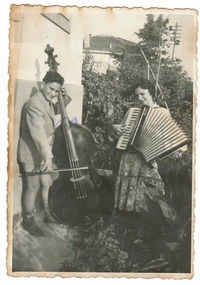
Nor did he choose his first encounter with the bow. It had been his companion from his earliest years: he held it every day and took it wherever destiny led him. Yet it was his own determination that turned a practical necessity into an opportunity. Eight years had passed since he began working as a double bassist, and his bow was no longer young either. It was beginning to lose its hair. There were few bow makers. Some reserved their skills for the most prominent violinists; others also worked for less established musicians but kept their bows for too long. As often happens, when we cannot rely on others we have to turn to ourselves. Encouraged by some advice from the Bologna violin maker Otello Bignami, whom he had met almost by chance, Giovanni Lucchi entered this world. At first he simply rehaired his own bow, then began responding to requests from fellow musicians. Finally he decided to go further, driven by the curiosity and desire to understand that would characterise all his later work. He travelled to Switzerland, where the renowned bow maker Siegfried Finkel worked, and asked him to guide him in making his first bow.
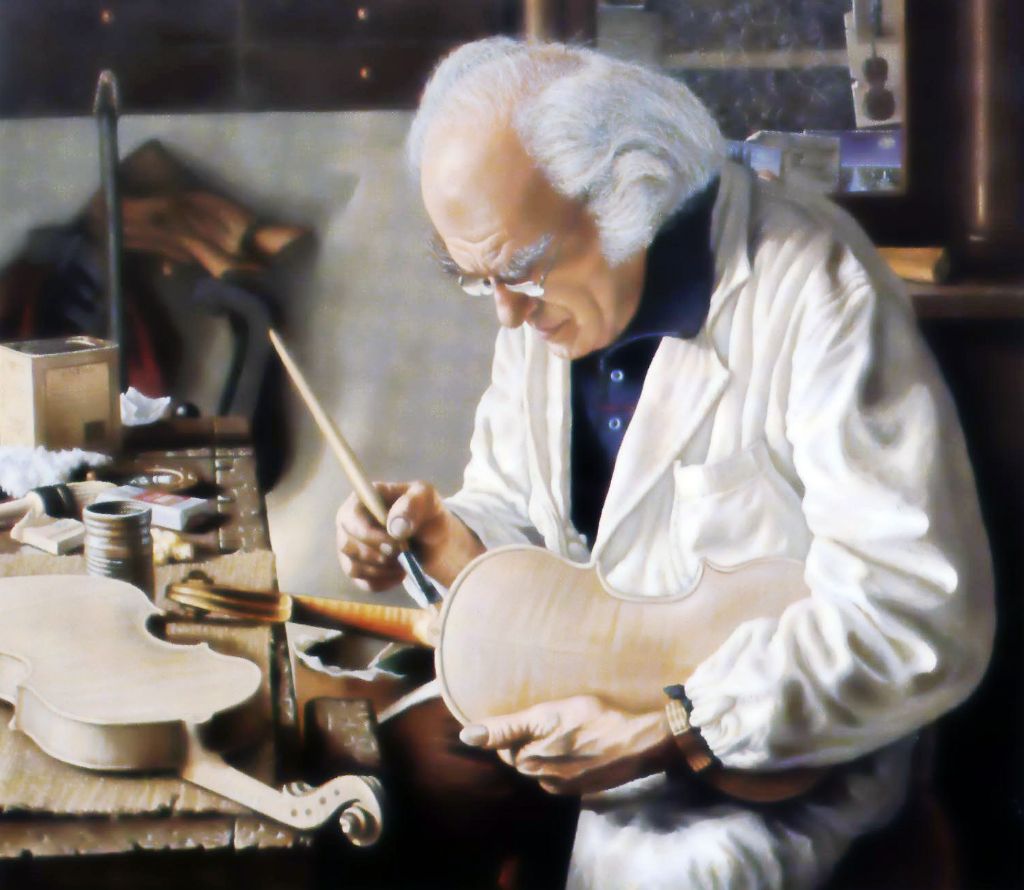
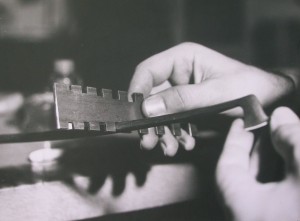
Starting with the raw materials, he explored this craft in depth, experimenting, developing ideas and studying, leaving nothing to chance. When chance itself presented him with something new, he immediately recognised its importance and made it his own. He investigated its causes and origins, seeking to turn an accident into experience. Everything he learned, tested or discovered, he shared spontaneously, as though his discoveries were a gift that the rest of the world had a right to enjoy.
In 1976, an opportunity to put this desire to share into practice arrived from Cremona: an invitation to teach at Italy’s first school for bow makers, established at the initiative of the local institutions. Once again destiny was choosing for him, or rather showing him a path towards a destination, or perhaps another stage. He decided to follow it.
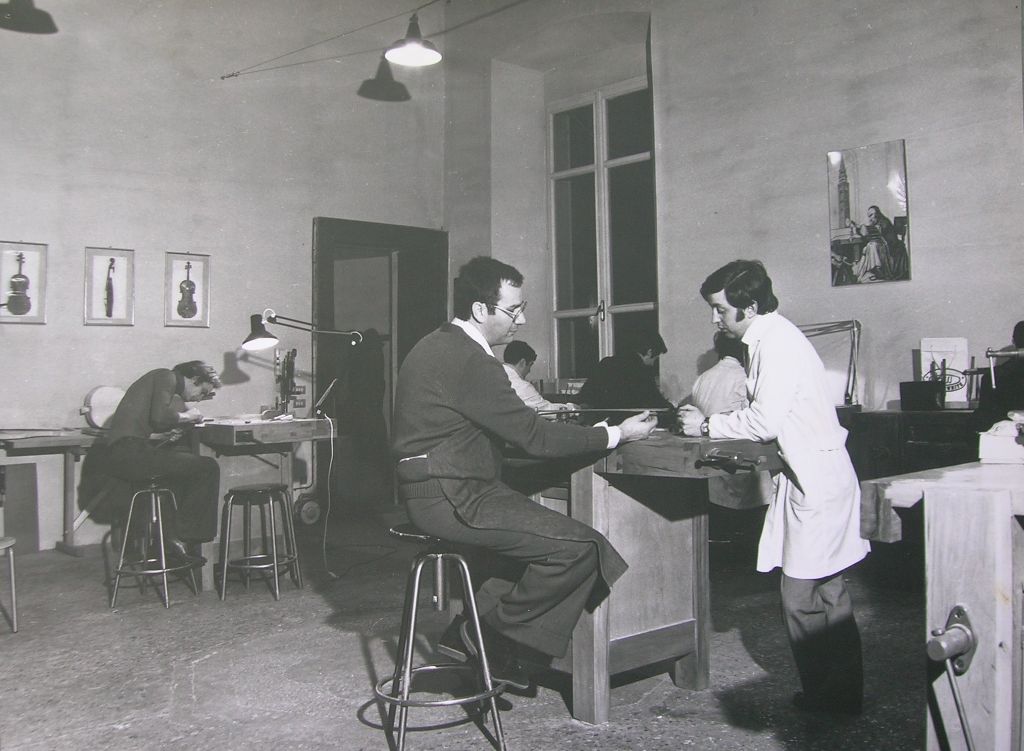
He moved from Bologna to Cremona, the home of violin making and the city of Stradivari, taking his discoveries, skills, knowledge, intuition and growing sensitivity with him, almost as though they were members of his already large family.
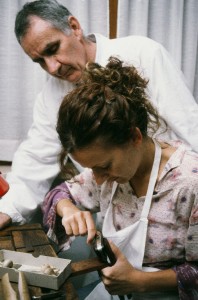
These were the most rewarding years of his life, divided between teaching and craftsmanship, between students at school and apprentices in the workshop, always surrounded by wood and horsehair. His family followed him without hesitation and with the same determination: his wife, three daughters and two sons, sharing his choices, enthusiasm and passion. Massimo, the eldest, accompanied his father on his travels in search of the best materials, the most resonant wood and the strongest, most elastic horsehair. Marta, the youngest, followed him into the workshop, observing him, studying his work, memorising his movements and learning from his advice. She also learned from his mistakes, which would be better described as experiments or attempts. Both children understood that consistency, quality, research and precision were indispensable. These seemingly simple words express the defining quality of Giovanni Lucchi’s life and work: precision in the constant pursuit of quality. It was his approach, perhaps his method, the “Lucchi Method”.
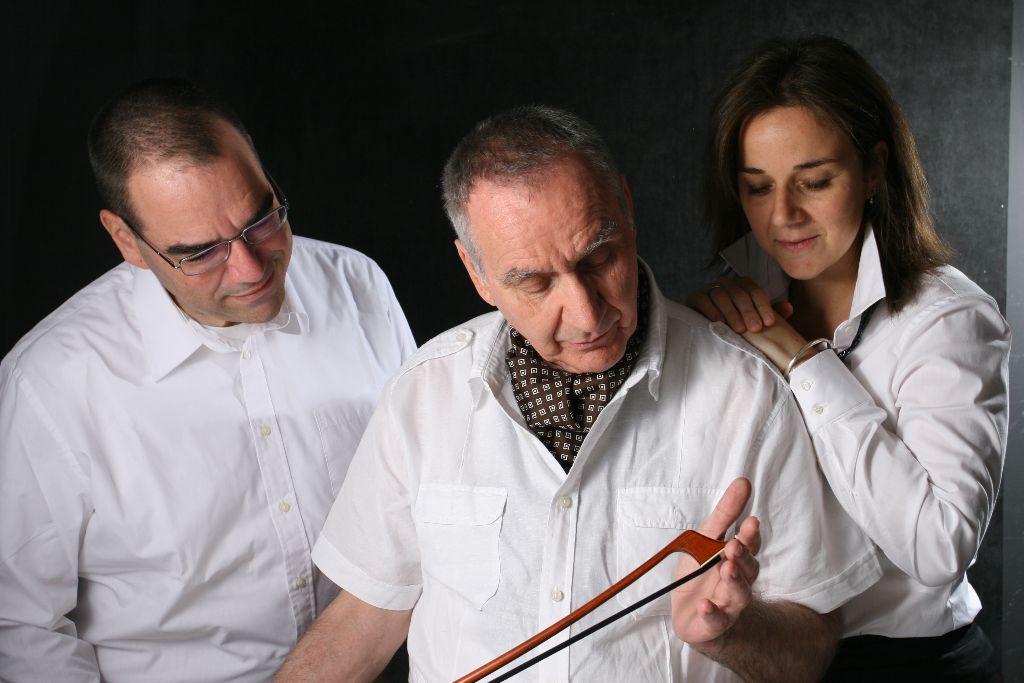
The same method continues to be explored and taught in his workshop after his death. His children carry on their father’s work with the same care, attention, rigour and passion.
“If there is one thing I have learned in so many years of work, it is that we can never stand still. Every result opens new doors, and new horizons are there to be explored.”
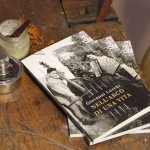
(Translated from Giovanni Lucchi’s autobiography Nell’arco di una vita.)