
“Here is another of my secrets to share with everyone.”
Giovanni Lucchi
The instrument that transformed the world of violin making measures the acoustic properties of materials by indicating their elastic response.
An indispensable aid in selecting the finest wood for building musical instruments of the highest quality.
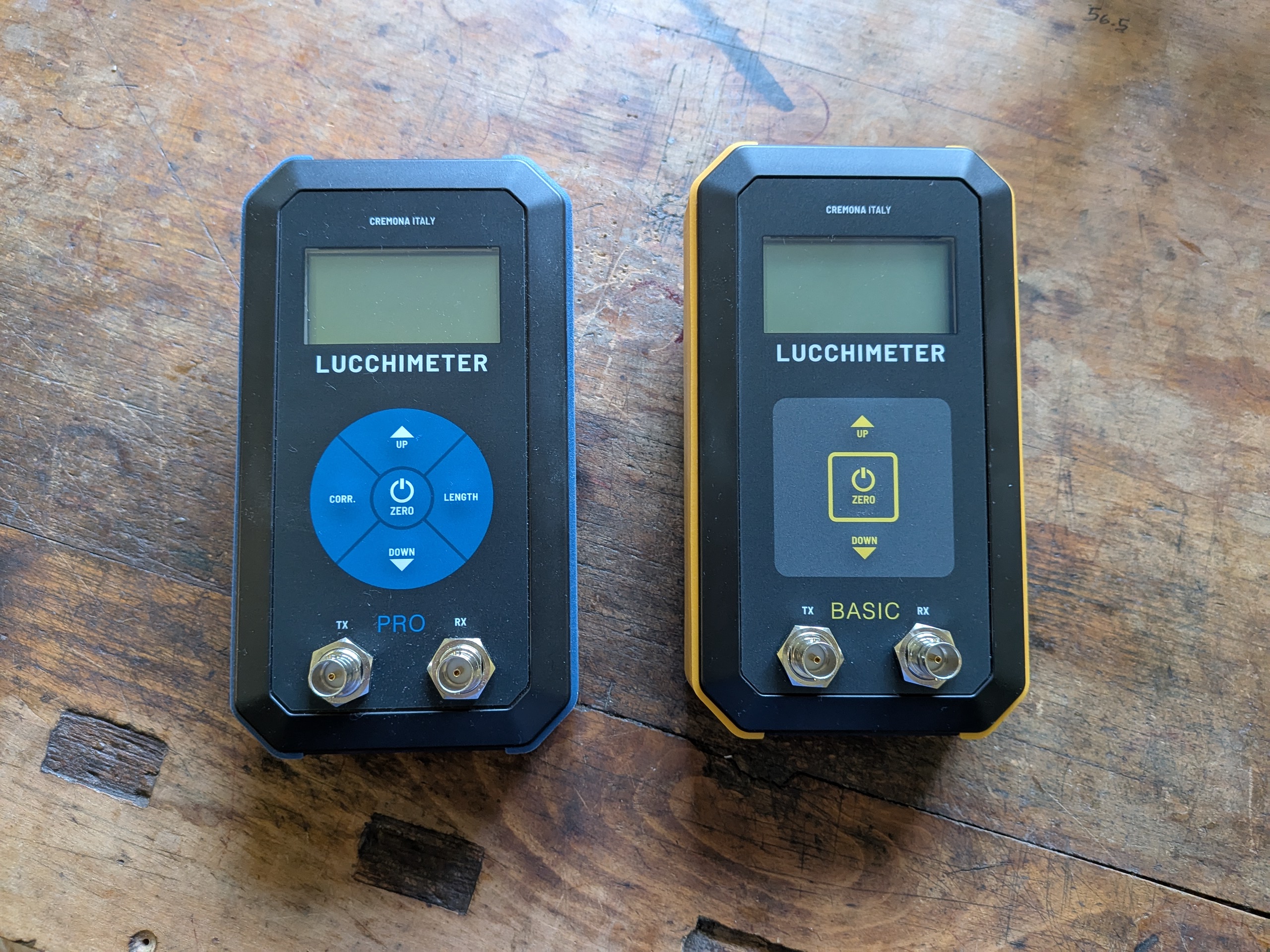
From musician to self-taught bow maker, from master craftsman to a leading figure in Italian bow making, Maestro Giovanni Lucchi turned his curiosity into a passion, a profession and an unceasing process of study. He analysed the entire craft in depth, every stage and every detail, looking to science for important answers alongside his creativity and sensitivity. Remaining faithful to his intuition and unafraid to follow it into possible dead ends, he explored technology, acoustic physics and even aerospace engineering. It was in these apparently distant fields that, after many attempts and experiments and despite the scepticism of others, he found the answer to his central question: how could he reveal a bow’s sound qualities and musicality without stripping it down? How could he discover the character of a log before working it?
The answer lay where the great Antonio Stradivari had already looked: in the speed at which sound travels through wood. What was needed was a more certain, reliable result, using the three centuries of technology separating the two craftsmen. A transmitting probe placed at one end of a log sends a pulse, a slight vibration. At the other end a receiving probe takes the place of Stradivari’s ear, measuring the time the vibration needs to travel through the wood’s full length. Over the same distance, a shorter time means a higher speed of sound in that piece of wood. A higher speed means a greater readiness to vibrate, a desirable quality in a bow. That is the principle.
Naturally, this is only one value that helps a craftsperson, using skill, intuition, experience and a sixth sense, understand the material better and decide how best to work it.
The LucchiMeter has many applications at every stage of construction, beginning with selecting the best wood. Once the raw material has been chosen, it helps identify which part is best suited to becoming an instrument and which should be discarded, the thicknesses to use, and the varnishes and glues that least alter its sound properties. It can also inform preservation and restoration, helping return a damaged or deteriorated instrument to its former condition while respecting its sound qualities.
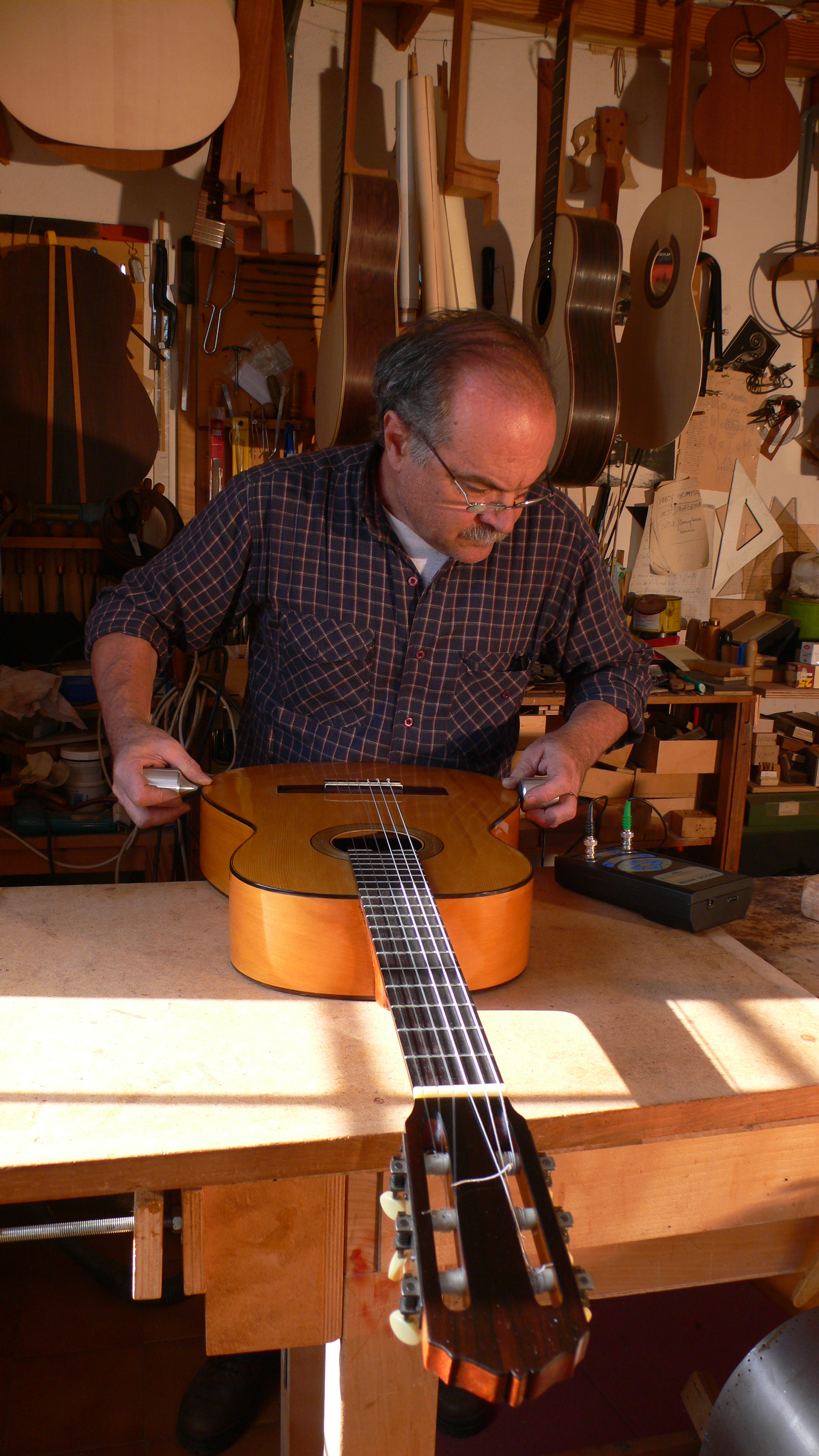
Throughout this account, the word “instrument” has deliberately remained general: it may mean a violin, viola, cello or double bass, a piano or guitar, an oboe or clarinet reed, or a bow. The LucchiMeter is now widely used around the world by tonewood suppliers, who have adopted the LUCCHI value as an informal unit of measurement, as well as violin-making schools, technical institutes and universities conducting non-destructive tests on many materials to investigate Young’s modulus, acoustic quality factor and damping. Musical instrument makers also use it. Although most widespread among makers of bowed instruments and bows, the tester has also been adopted by makers of plucked instruments, including the renowned guitar makers Andrea Tacchi and Paolo Coriani. Many other international makers use it, from Australia to Canada, Europe and the USA.
When properly recorded and interpreted, the data provided by the LucchiMeter can become a valuable archive. It gives the master craftsperson another ally in pursuing the desired quality, while preserving the manual character of the craft and the maker’s expertise.
It is one element in the process. Stradivari created his celebrated instruments by candlelight and entirely by hand. Today violin makers benefit from electricity, dial thickness gauges and the LucchiMeter.
LucchiMeter: a simple principle with a revolutionary application
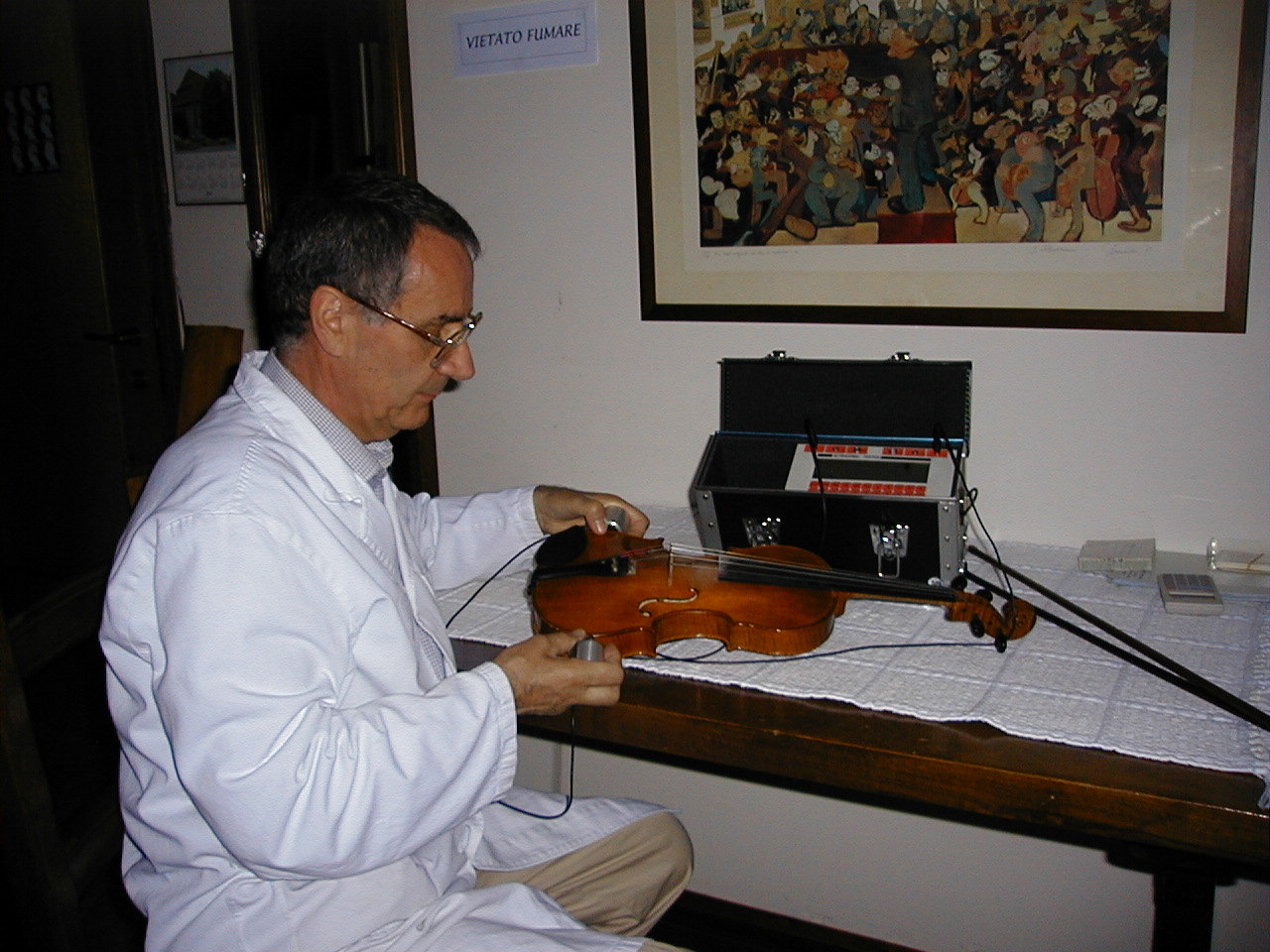
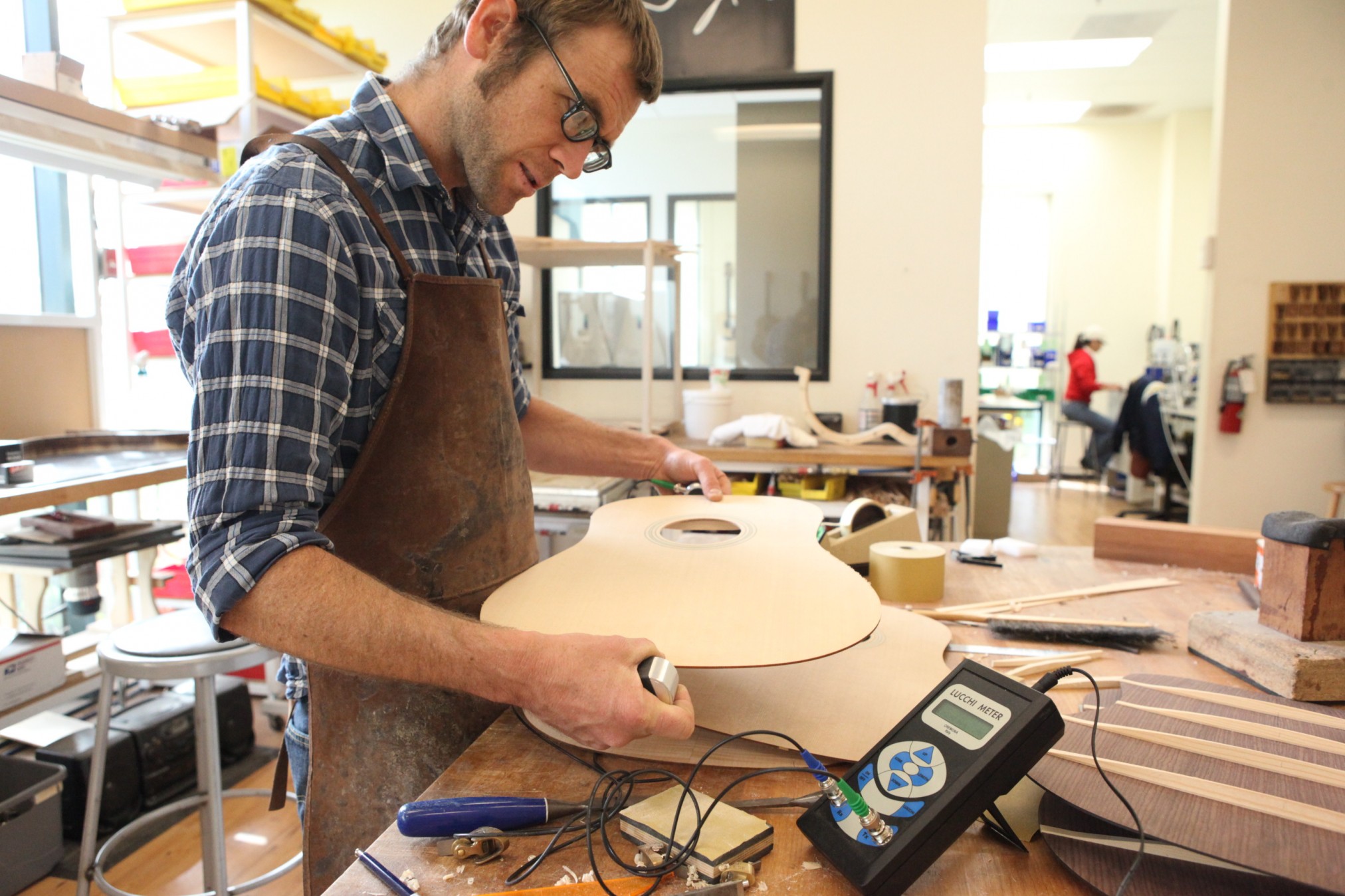
What the device does is very simple. A transmitting probe sends an ultrasonic pulse into the material being measured. On the opposite side, a receiving probe detects the pulse after it has passed through the object and measures its travel time.
Like a stopwatch, it measures the microseconds taken by sound to pass through the object.
Knowing the distance between the two probes, in other words the dimension of the object being measured, makes it possible to calculate the speed of the wave through the material by dividing distance by time. It is expressed in metres per second:
Speed = Distance / Time
Maestro Giovanni Lucchi’s revolutionary application of this simple principle is connected to the discovery of a direct relationship between the speed of sound and the acoustic characteristics of wood, including its vibration or resistance to vibration. It provides a parameter to assist the master craftsperson’s assessment.
In particular:
- For violin bows, which are long and narrow, only longitudinal speed of sound is significant, directly proportional to the quality of the wood.
- For soundboard wood, both dimensions of the surface need to be considered, so sound speed must be assessed longitudinally and transversely. For soundboards, transverse or radial speed may be more important, as it is more affected by wood density. High transverse speed values can therefore indicate good acoustic and density characteristics.
The best assessment of a soundboard combines the two sound-speed measurements, longitudinal and transverse. This requires the craftsperson’s experience to interpret them in light of their own construction history and sensitivity in selecting wood.
Another useful application is finding the highest speed of sound within a single board. By moving the probes along its edges, the maker can identify the grain direction, which is not always aligned with the outer faces. A shorter time, and therefore a higher speed, indicates that the medullary rays or transverse grain are aligned with the two probes, conducting the wave more effectively and indicating the appropriate direction.
The Modena guitar maker Paolo Coriani describes a particular use of the LucchiMeter: “I make guitars that are not exact copies of historical guitars, but whose sound I want to bring as close as possible to that of the originals. Reproducing an original decoration, its shapes and dimensions, may be relatively straightforward. It is harder to make a confident assessment of the quality and characteristics of the wood that gives the instrument its particular sound. I can see an original soundboard, the width and type of grain, and whether medullary rays are present. But I cannot touch or listen to it as I could a new board, tapping, rubbing or flexing it in my hands, or examining it by other means that provide reliable, repeatable information. The Lucchi Tester gives me precise information about the wood’s characteristics, making comparisons between different instruments by the same maker possible. It helps me select a board for a copy with characteristics as close as possible to the original and assess whether a visual selection is appropriate. This does not reduce or remove my judgement, creativity or personality. It gives me more information, which I can use in the best possible way alongside my experience.”
Developed to investigate the elasticity of wood for musical instruments, it has also found a market in applied research in other fields:
- natural and synthetic materials for musical instrument strings;
- aluminium castings for vibraphone bars;
- the elasticity of natural or synthetic varnishes for musical instrument soundboxes;
- braces and soundboards for pianos, guitars, violins and other instruments;
- piano hammer shanks and felts;
- raw cane for wind instruments;
- oboe, clarinet and other reeds;
- the elasticity of different glues and their curing times;
- the elasticity of epoxy and other adhesives;
- changes produced by various wood-hardening treatments;
- artificial ageing of wood through microfractures;
- different types of accelerated seasoning;
- the elasticity and drying times of varnishes.
Commercially available since 1983, it is now widely used by:
- violin-making schools around the world;
- makers of oboe, clarinet and other reeds, to select cane before processing;
- musical instrument makers and manufacturers;
- tonewood suppliers;
- research institutes;
- technical institutes conducting non-destructive tests on many materials to investigate Young’s modulus, acoustic quality factor and damping, or the decay of vibrations;
- universities;
- foundations.
Further information: www.lucchimeter.com
To buy a LucchiMeter: info@lucchicremona.com or visit our Online Shop